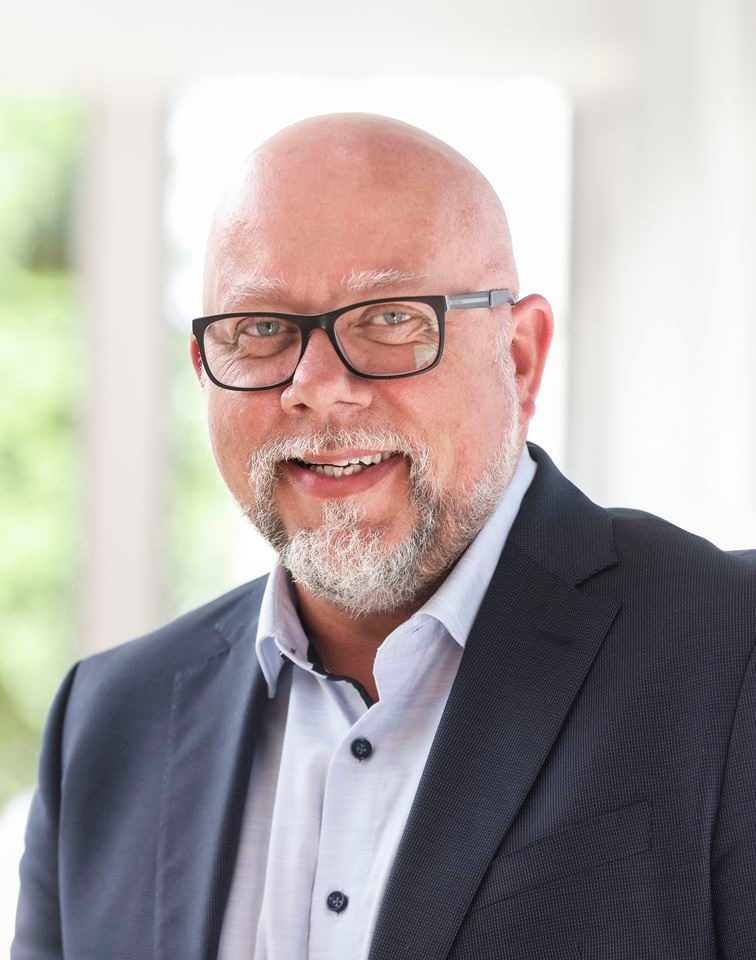
Prof. Dr. Markus Biesalski, Technical University of Darmstadt
bio
Markus Biesalski was awarded a PhD in Macromolecular Chemistry in 1999 at the Max Planck Institute for Polymer Research, in collaboration with the University of Mainz. From 2000 to 2002, he was a DFG postdoctoral fellow at the University of California, Santa Barbara. In 2002, he joined the Faculty of Technology at the University of Freiburg as an assistant professor and Emmy Noether research group leader. He completed his habilitation there in 2008. Also in 2008, he became a full professor at the Technical University of Darmstadt, where he has headed the Laboratory of Macromolecular Chemistry and Paper Chemistry in the Chemistry Department ever since.
Since 2019, Markus Biesalski has served as the Director of the Ernst-Berl Institute of Technical Chemistry and Macromolecular Chemistry. Since 2021, he has held the position of chairman of the scientific advisory board of the Model Factory Paper gGmbH in Düren. Since 2023, he has been a member of the Xchange advisory board to the president of the TU Darmstadt. Since 2024, he has been a board member of the scientific committee of the Fundamental Research Society of Pulp & Paper in Cambridge, UK. Since 2016, Markus Biesalski has served as an elected referee for the program Industrial Collective Research (IGF) of the Federal Ministry of Economic Affairs and Energy, Section 5 Applied Chemistry. Between 2011 and 2015, he fulfilled the role of coordinator and spokesperson for the Hessian Excellence Research Cluster Soft Control. Markus Biesalski is a Fellow of the Landesstiftung Baden-Württemberg gGmbH and an Emmy-Noether Fellow of the DFG. He was awarded the Freunde der TU Darmstadt Award for Sustainability and Interdisciplinarity in 2024, the golden badge of honor of the Verein Zellcheming in 2023, and the Best Paper Award of the TAPPI Paper Physics Committee in both 2018 and 2016.
The research group, led by Professor Biesalski, combines polymer and paper chemistry to develop sustainable, high-performance paper materials for a range of applications, including smart packaging, lightweight construction, medical sensors and adaptive soft actuators. All research is guided by circular principles to strengthen contributions to a modern bioeconomy.
For more details please click here.
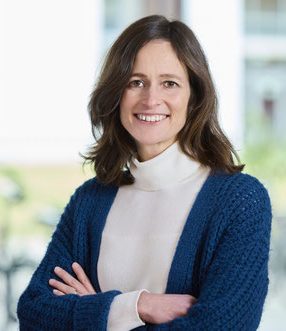
Prof. Dr. Birgit Esser, Ulm University
bio
Birgit Esser is Full Professor of Organic Chemistry at Ulm University, Germany, since 2022. She obtained her Ph.D. in 2008 at the University of Heidelberg, Germany. After postdoctoral studies at the Massachusetts Institute of Technology (U.S.A.) as Leopoldina fellow from 2009–2012, she joined the University of Bonn, Germany, as Liebig and later Emmy-Noether junior research group leader. From 2015–2021 she was Associate Professor for Molecular/Organic Functional Materials at the University of Freiburg, Germany. Her research focusses on hoop-shaped, conjugated π‑systems, organic electrode materials for post-lithium batteries, and photo(redox) catalysis. She received an ERC Consolidator Grant in 2023 and is designated Spokesperson of the Cluster of Excellence POLiS since 2026.
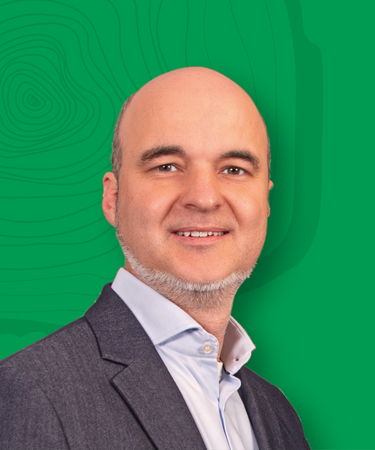
Dr. Dirk Hollmann, Cell2Green GmbH
bio
Dr. Dirk Hollmann is a chemist, certified sustainability manager, and certified project manager working at the interface of sustainable chemistry, circular materials, and business-oriented innovation. He holds a PhD in chemistry and has an extensive academic background in catalysis, green chemistry, and sustainable material systems. At the University of Rostock, he has conducted research and led projects in Sustainable Chemistry, focusing on environmentally friendly chemical processes, renewable raw materials, and circular economy concepts. He is also actively involved in teaching Sustainable Chemistry and Business Chemistry with a focus on sustainability, emphasizing the translation of fundamental research into scalable and economically viable applications.
Since 2025, Dr. Hollmann has been CEO and Co-Founder of Cell2Green, where he applies his academic expertise to the development and commercialization of bio-based, biodegradable, recyclable, and plastic-free cellulose films for sustainable packaging solutions.
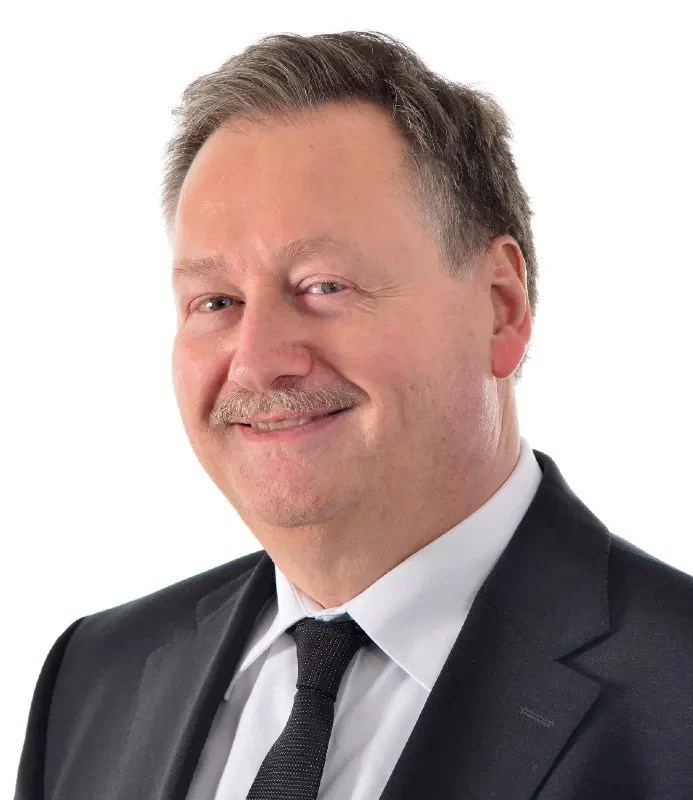
Dr. Gerhard Maier, Polymaterials AG
bio
Gerhard Maier is CTO of Polymaterials AG in Kaufbeuren, Germany, which he co-founded in 1999, together with Jürgen Stebani. Polymaterials is the leading service provider for contract development, scale-up and trial production of polymers and plastics for all kinds of applications in the range of 100g to 100t. Examples for past projects are fluorine free proton conducting membranes for electrolyzers and fuel cells, biodegradable polymers, shape recording materials, bio-based polyimides, and various polyacrylics with special properties. Gerhard graduated from TU München with a diploma in chemistry in 1985, received his PhD in Macromolecular Chemistry from the University of Bayreuth with Oscar Nuyken in 1989, moved back to TU München for his degree of Habilitation in 1996, and spent a year as a visiting scientist at the University of North Carolina at Chapel Hill with Joe DeSimone.
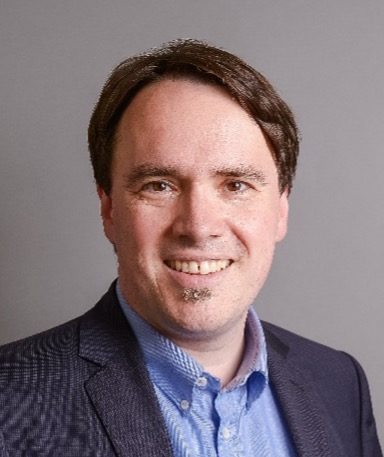
Prof. Dr. Bastian Rapp, University of Freiburg
bio
Prof. Dr.-Ing. Bastian E. Rapp is the Full Professor of Process Technology at the Department of Microsystems Engineering (IMTEK) and head of the NeptunLab. He is the Managing Director of the Freiburg Material Research Center (FMF) and co-speaker of the German Research Foundation (DFG) Cluster of Excellence Living, Adaptive and Energy-Autonomous Materials Systems (livMatS). He is cofounder, founding CEO and current CTO of the spin-off Glassomer GmbH which commercializes next-generation 3D printing processes for glass.
For his work he was awarded, among others, the Edison Prize of the General Electric (GE) Foundation, the GMM award, and the Südwestmetallförderpreis. In 2019 he received an ERC Consolidator Grant from the European Research Council for his work on tactile displays for the visually impaired. His work has been published in the most important international journals including Advanced Materials, Angewandte Chemie, Nature and Science and has been featured in national and international radio and print media including the BBC, the New York Times and the Discovery Channel. In 2021 he was nominated by German Minister of Research and Education Anja Karliczek for the German Future Award of the German President for Technology and Innovation. In 2022 he was nominated for the German Future Award of the German President for Technology and Innovation with his spin-off company Glassomer for the development of a new generation of techniques for high-resolution structuring of glass. He is the only supervisor with two PhD students that won the Deutsche Studienpreis of the Körber Foundation, the price for the most important PhD thesis in Germany, under his supervision.
Bastian Rapp studied mechanical engineering at the University of Karlsruhe and finished his PhD at the same university in 2008 working on biosensors for biomedical diagnostics. In 2017 he finished his Habilitation at the Karlsruhe Institute of Technology with the publication of a textbook on fluid dynamics in microfluidics. His research focuses on the development of novel materials, processes and applications in microsystem engineering, life sciences and biotechnology as well as instrumental and clinical analytics.

Prof. Dr. John A. Rogers, Northwestern University, USA
bio
Professor John A. Rogers obtained BA and BS degrees in chemistry and in physics from the University of Texas, Austin, in 1989. From MIT, he received SM degrees in physics and in chemistry in 1992 and a PhD degree in physical chemistry in 1995. From 1995 to 1997, Rogers was a Junior Fellow in the Harvard University Society of Fellows. He joined Bell Laboratories as a Member of Technical Staff in 1997 and served as Director of the Condensed Matter Physics Research Department from 2000 to 2002. He then spent thirteen years on the faculty at the University of Illinois at Urbana/Champaign, finally as the Swanlund Chair Professor and Director of the Seitz Materials Research Laboratory. In the Fall of 2016, he joined the faculty at Northwestern University where he is Director of the Querrey-Simpson Institute for Bioelectronics. He has published ~1000 papers and he is co-inventor on ~100 patents, >70 of which are licensed and in active use. More than 160 former members of his group are now in faculty positions at universities around the world. His research has been recognized by many awards, including a MacArthur Fellowship (2009), the Lemelson-MIT Prize (2011), the Smithsonian Award (2013), the Benjamin Franklin Medal (2019), a Guggenheim Fellowship (2021), the James Prize (2022), the IEEE Biomedical Engineering Award (2024) and the Bakerian Medal and Lecture of the Royal Society (2025). He is a member of the US National Academy of Engineering, of Sciences, of Medicine and of Inventors, the American Academy of Arts and Sciences and the Royal Society.

Prof. Dr. Jürgen Rühe, University of Freiburg
bio
Jürgen Rühe studied chemistry at the universities of Münster and Mainz. In 1989 he received his Ph.D. from the Johannes-Gutenberg University, Mainz, working with Prof. Dr. G. Wegner at the Max-Planck-Institute of Polymer Research on electrically conducting polymers, specifically conjugated polyheterocycles. After a postdoctoral stay at the IBM research laboratories in San Jose, California, where he studied ultrathin layers for the improvement of tribological properties of materials, he returned to Germany and in 1991 started to work at the University of Bayreuth as a “Liebig”-fellow of the VCI and a fellow of the German Research Council (DFG) in the area of polymers at interfaces. In 1995 he completed his Habilitation at the faculty of Biology, Chemistry and Geosciences of the University of Bayreuth and rejoined the MPI of Polymer Research, where he held an associate professor position (“C3-Stelle der Max-Planck-Gesesellschaft”) and was in charge of a Max-Planck research group on interface chemistry at the MPI-P. From 1998-2001 he has been appointed visiting associate professor at Stanford University and as associate member of CPIMA (Center for Polymer Interfaces and Macromolecular Assemblies). In October 1999 he accepted a full professor position as the chair for chemistry and physics of interfaces at the Department of Microsystems Engineering (IMTEK) at the University of Freiburg.
He has been visiting scientist at the Cavendish Laboratories, Cambridge (UK), RIKEN, Tokyo (Japan) and Stanford University (USA). Jürgen Rühe was the Managing Director of the Department of Microsystems Engineering and the founding director of the Freiburg Institute for Advanced Studies (FRIAS). From 2006 to 2014 he served as Vice Rector for Internationalization and Technology Transfer of the University of Freiburg.
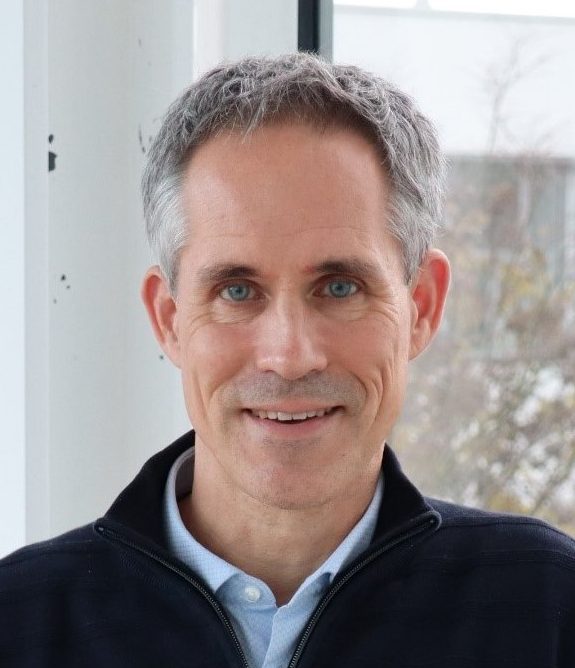
Prof. Dr. Stefan Schiller, Goethe University Frankfurt
bio
Stefan Schiller is professor for pharmaceutical technology of macromolecular systems in pharmacy and tissue engineering at the Goethe University Frankfurt am Main since 2022. He studied chemistry with a focus on macromolecular and biochemistry at the Justus Liebig University Gießen, the Johannes Gutenberg University Mainz and the University of Massachusetts, Amherst, USA. He completed his doctorate in bioorganic chemistry and macromolecular chemistry of biomimetic systems at the Johannes Gutenberg-University/Max Planck Institute for Polymer Research, the IBM Research Center Almaden, San Jose and Stanford University. For his postdoctoral research he joined the group of Peter G. Schultz at the The Scripps Research Institute, La Jolla, California, USA working in the field of bioengineering and synthetic biology. As a Junior Research Fellow at the Albert-Ludwigs-University Freiburg and the Freiburg Institute for Advanced Studies (FRIAS), he headed an independent research group and continued his independent academic career on novel biomaterial systems.
He published work on various topics relating to biomimetic nanosystems and adaptive biomaterials has been published in leading international journals including Nature Materials, Advanced functional Material and Angewandte Chemie. He has received multiple awards for his work on intelligent biomaterials, biomacromolecular systems and nanoarchitectures including the BMBF Research Prize for next-generation biotechnological processes, which cover aspects of a circular and sustainable bioeconomy.
The Schiller lab’s research focuses on novel, repetitive, protein-based macromolecules, primarily from the class of intrinsically disordered structural proteins, e.g. elastin-like proteins. These proteins form various supramolecular architectures with applications ranging from synthetic cells to drug delivery. The lab also researches extracellular matrix (ECM)-like adaptive materials that mimic nature’s high-performance materials. These materials are microstructured using 4D printing to create novel soft robotic machines, non-equilibrium autonomous muscle-like systems and tissue replacement materials.
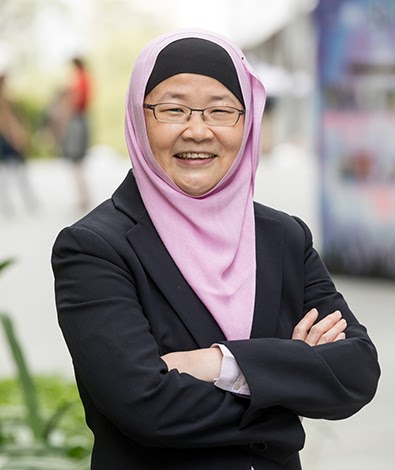
Prof. Dr. Jackie Yi-Ru Ying, King Faisal Specialist Hospital & Research Centre (KFSHRC), Saudi Arabia
bio
Jackie Y. Ying was Professor of Chemical Engineering at MIT, and Executive Director of Institute of Bioengineering and Nanotechnology, A*STAR, Singapore. She is Chief Innovation and Research Officer of King Faisal Specialist Hospital & Research Centre, Saudi Arabia. She serves on the Board of Directors of Saudi Arabia’s Research, Development and Innovation Authority, and the Board of Trustees of Princeton University.
Prof. Ying has authored 400 articles (52,890 citations, h index: 108). She is ranked #18 globally in biomedical engineering by ScholarGPS. She has won numerous awards for her research in bioengineering and nanomaterials, including the Mustafa Prize – Top Scientific Achievement Award (2015) and King Faisal Prize in Science (2023). She has been elected to German National Academy of Sciences, Leopoldina, U.S. National Academy of Inventors and U.S. National Academy of Engineering. She is featured on the first Forbes 50 Over 50 Global list of women trailblazers (2025).
Prof. Ying has 200 primary patents, 42 of which have been licensed. She has served on the Board of Directors and/or Advisory Boards of 10 start-up companies and 2 venture capital funds. One of her spin-off companies, SmartCells, Inc., developed a technology capable of auto-regulating insulin release depending on the blood glucose levels. Merck acquired SmartCells in 2010, with milestone-based aggregate payments in excess of US$500 million to further develop this nanomedicine for clinical trials. Prof. Ying also co-founded Curiox Biosystems, which successfully miniaturized high-content drug screening assay in the form of droplet microarray. Curiox went IPO on KOSDAQ in 2023.
 Macromolecular Colloquium Freiburg